
 Tiếng Việt
 한국어
 Русский
 简体中文
Examinations and treatment for dogs and cats
A veterinary examination turns your observations into questions the veterinarian can assess: when the signs began, how they changed, and how they affect eating, drinking, elimination, breathing or movement. Many conditions can cause the same symptom. Choosing medication based on the symptom alone can miss the cause.
Purpose of the service and what to expect
A veterinary examination turns your observations into questions the veterinarian can assess: when the signs began, how they changed, and how they affect eating, drinking, elimination, breathing or movement. Many conditions can cause the same symptom. Choosing medication based on the symptom alone can miss the cause.
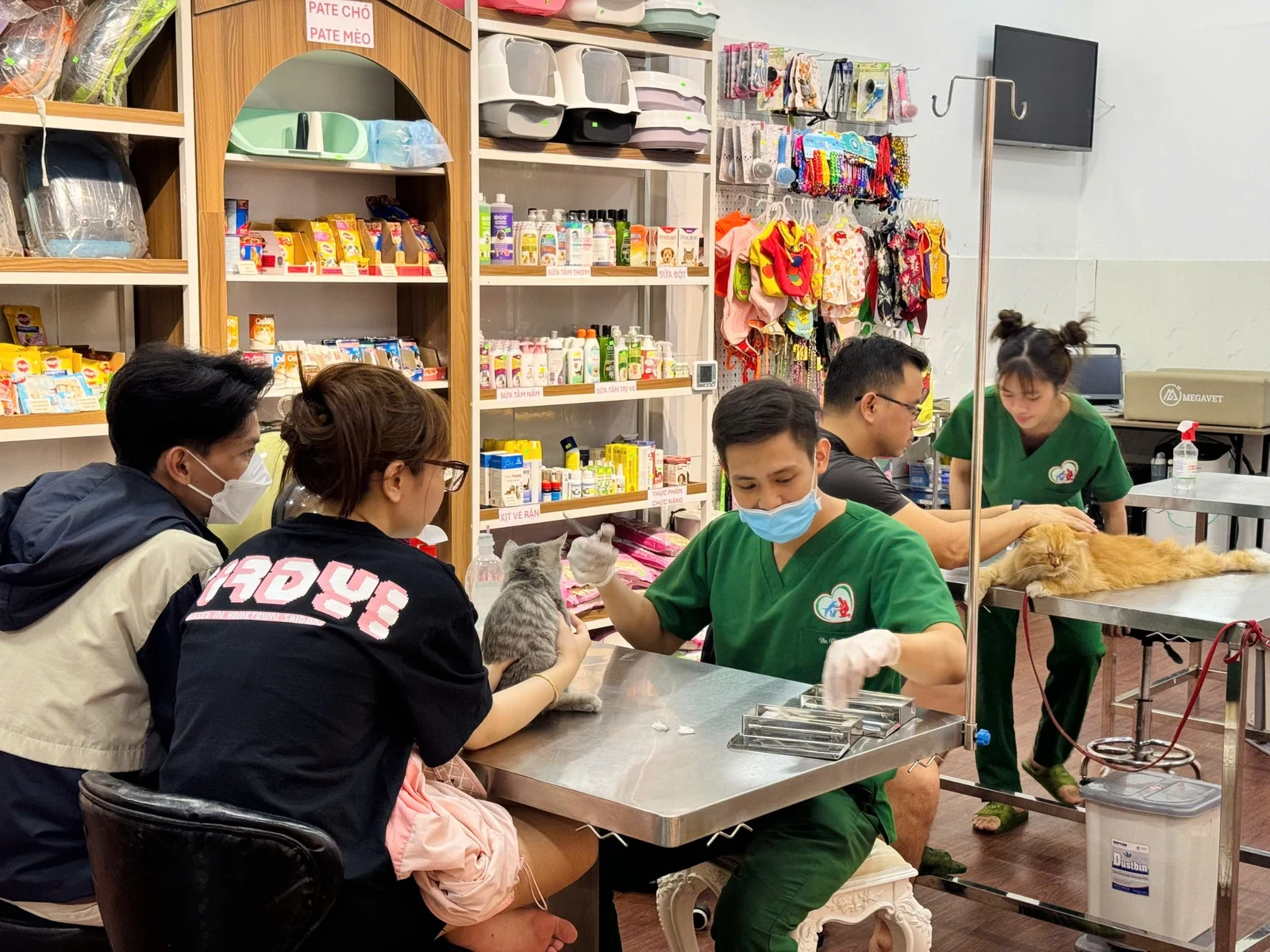
At the appointment, the veterinarian takes a medical history, examines your pet and decides what needs attention first. Tests, imaging or home monitoring are recommended when they can clarify the diagnosis or affect a decision. Ask why each step is needed, what the veterinarian has determined and what still needs monitoring.
Situations to discuss with the clinic
- Record how much your pet actually eats at each meal, its weight and how long it has gone without eating. Cats that stop eating for an extended period need prompt care because of the risk of fatty liver disease.
- For a newly adopted kitten, estimate its age and check weight gain, eye and nasal health, and the risk of infectious disease. Keep it separate from other cats until you get advice.
- Note how often your pet passes stool, how loose it is, any mucus or blood, and recent food changes. A young animal with diarrhea and lethargy needs assessment for dehydration and infectious disease.
- Weigh your pet on the same scale at the same time and under the same conditions. A pet losing weight while eating more needs a different assessment from one losing weight because it eats less.
- Follow-up may include repeat tests, a wound check or a check for side effects that are hard to see at home. Keep the appointment even if your pet is more active.
How to prepare
Have your pet’s age, weight, vaccination history, diet, medications and past records ready. Write down specific observations. Take photos or video only when it is safe and doing so will neither hurt your pet nor delay care. When you book, describe the main concern first so the clinic can plan how to see your pet.
What to monitor and what to expect afterward
After the exam, confirm how to give medications, what to monitor and when to return. Have one person keep the medication log to avoid duplicate doses. Report new symptoms or an unexpected response and speak to the veterinarian before changing treatment based on another pet’s experience.
Labored breathing, collapse, prolonged seizures, inability to urinate or unproductive retching with abdominal swelling warrant immediate emergency care. Seek help immediately.
Appointments, scope and costs
When booking, give your pet’s species, age and current condition, and explain what you want to discuss. The clinic confirms which services it can provide, what needs an in-person assessment and the estimated cost for your case. If your pet needs additional tests or care, ask about the purpose and how decisions will be made. If you are traveling from Bình Chánh, District 8 or Long An, send the records and confirm before you leave. Check the actual distance and travel conditions before setting out.
Book a visit and get guidance from DR.VET
The veterinary team at DR.VET helps you understand your pet’s condition and choose suitable care. Call 0907 675 123 with your pet’s species, age, main concern and what you need help with. The clinic is at 1391 Văn Tiến Dũng, Hamlet 5, Bình Hưng Commune, Ho Chi Minh City. Appointment times, what the clinic can provide and costs depend on the case. If you are traveling a long distance, call before you leave.
Further reading
These resources provide professional background. Your pet’s care plan should be based on its examination, medical history and circumstances. Consult the clinic before applying international guidelines to your pet or assuming a service is available.
Frequently asked questions
What should I prepare before contacting the clinic about an examination or treatment?
Have your pet’s age, weight, vaccination history, diet, medications and past records ready. Write down specific observations. Take photos or video only when it is safe and doing so will neither hurt your pet nor delay care. When you book, describe the main concern first so the clinic can plan how to see your pet.
How does the clinic determine the cost?
The cost depends on your pet’s needs, the scope of care and what is included. During your consultation, ask what each charge is for, whether it covers medication or monitoring and how the clinic will ask for approval if more care is needed. Rates may differ from case to case.
What should I monitor after the visit?
After the exam, confirm how to give medications, what to monitor and when to return. Have one person keep the medication log to avoid duplicate doses. Report new symptoms or an unexpected response and speak to the veterinarian before changing treatment based on another pet’s experience.
Articles about this service
Find articles that can help you prepare for a discussion with DR.VET.
- Mèo giảm bạch cầu có phải luôn nhiễm FPV? Đọc công thức máu và test phân
- Mèo FPV trong nhà nhiều mèo: cách ly, khử khuẩn và chăm sóc hồi phục
- GS-441524 trong điều trị FIP ở mèo: lựa chọn thuốc và theo dõi
- Mèo FIP đang dùng GS-441524 ăn ít hoặc sốt lại: khi nào cần khám?
- Interferon omega trong điều trị Parvo ở chó: vai trò và giới hạn
- Chó con Parvo: theo dõi hồi phục, dinh dưỡng và phòng lây sau xuất viện
- Chó ngứa và rụng lông: khám viêm da theo nguyên nhân trước khi chọn thuốc tắm
- Mèo liếm trụi lông bụng: tìm ngứa, ký sinh trùng và dị ứng trước khi quy cho stress
- Ghẻ Demodex và Sarcoptes ở chó: xét nghiệm khác nhau, không dùng một đơn chung
- Mèo rụng lông, đóng vảy: phân biệt nấm da và ghẻ bằng kiểm tra phù hợp
- Chó da nhờn, có mùi và ngứa: đánh giá Malassezia cùng bệnh nền
- Viêm da mủ tái phát ở chó: tìm bệnh nền và dùng kháng sinh có mục tiêu
- Nghi dị ứng thức ăn ở chó mèo: thử khẩu phần loại trừ và xác nhận kết quả
- Khám viêm da chó mèo tại Bình Hưng: chuẩn bị hồ sơ và kế hoạch điều trị lâu dài
- Chó mèo ăn ít: chuẩn bị thông tin gì khi đi khám?
- Mèo trốn nhiều hơn: khi nào nên đặt lịch khám?
- Khám chó con lần đầu: bắt đầu từ đâu?
- Khám mèo con mới nhận: cần trao đổi những gì?
- Khám chó lớn tuổi: theo dõi gì ngoài cân nặng?
- Khám mèo lớn tuổi: nhận ra thay đổi kín đáo
- Đi khám vì nôn: video giúp bác sĩ thế nào?
- Tiêu chảy ở chó mèo: ghi nhật ký trước buổi khám
- Khám vì ngứa: vì sao cần tên thuốc đã dùng?
- Ho ở chó và mèo: mô tả cơn ho để bác sĩ đánh giá đúng
- Chó, mèo tiểu khác thường: thông tin cần báo khi đặt lịch khám
- Chó mèo khập khiễng: chuẩn bị buổi khám vận động
- Tái khám cho chó, mèo sau dùng thuốc: cần mang theo gì?
- Triệu chứng ngắt quãng ở chó, mèo: cách ghi nhận bệnh sử
- Theo dõi cân nặng chó, mèo: ghi dữ liệu có ích trước buổi khám
- Mèo sợ lồng vận chuyển: chuẩn bị đi khám nhẹ nhàng
- Chó lo lắng ở phòng khám: báo trước giúp ích gì?
- Khám chó, mèo có bệnh nền: hồ sơ nào giúp điều trị an toàn?
- Khám chó, mèo đã có chẩn đoán ở nơi khác: chuẩn bị thế nào?
- Xin ý kiến thứ hai cho chó, mèo: đặt mục tiêu buổi khám rõ ràng
- Chó, mèo đã khỏe hơn: vì sao vẫn cần tái khám đúng hẹn?
- Khám tổng quát và khám theo triệu chứng ở chó, mèo khác nhau thế nào?
- Nhiều chó, mèo cùng có dấu hiệu bệnh: cần báo gì trước khi khám?
- Khám chó, mèo mới cứu hộ: ưu tiên thông tin và chăm sóc nào?
- Đọc kế hoạch điều trị cho chó, mèo sau buổi khám: hiểu từng quyết định
- Trao đổi chi phí khám chó, mèo: ưu tiên đúng nhu cầu quan trọng
- Một người đưa chó, mèo đi khám, một người chăm: bàn giao thế nào?
- Đưa chó, mèo từ Long An đến DRVET Bình Hưng: chuẩn bị chuyến khám
- Chó, mèo có dấu mới: khi nào cần gọi ngay trước lịch khám?
- Sau buổi khám đầu cho chó, mèo: lập hồ sơ theo dõi tại nhà